🌿 Why Plant Native? Save Money, Save Time, and Build a Better Garden
Gardening can get expensive remarkably fast.
You buy a beautiful plant at the nursery, bring it home, dig the hole, amend the soil, fertilize it, water it faithfully, protect it from whatever weather it apparently finds personally offensive… and sometimes the ungrateful thing dies anyway.
There is another way to build a beautiful garden. Start by looking at the plants that already belong where you live.
Native plants have spent generations adapting to the climate, seasons, soils, rainfall patterns and wildlife of their region. Choosing the right native plant for the right place can mean less watering, less fertilizer, fewer replacements and considerably less time spent trying to convince a plant to survive somewhere it never particularly wanted to live.
What Is a Native Plant?
A native plant is a species that occurs naturally in a particular region and developed there without being introduced by people. And the words “particular region” matter. A plant native to the United States isn’t necessarily native to your part of the United States. Something perfectly at home in a Florida landscape may have absolutely no interest in participating in a Minnesota winter.
Even within the same state, soil, rainfall, elevation and other growing conditions can vary enormously. That’s why we’re beginning a new Native Plant Showcase here at Daily Deal Busters.
We’ll start in Texas and then work our way around the country, looking at beautiful and useful plants that actually belong in the places where we’re asking them to grow.
Native Plants Can Save You Money
The cheapest plant isn’t necessarily the one with the lowest price on the nursery tag. It’s the one you don’t have to buy three times. When a plant is poorly suited to your climate, keeping it alive may require additional water, fertilizer, soil amendments, pest treatments, winter protection, shade cloth or other supplies. And after all that, it may still die.
A well-chosen native plant is already adapted to many of the environmental conditions you’re trying to reproduce artificially for less-suitable plants. That doesn’t mean every native plant will survive anywhere you stick it. A moisture-loving native planted in dry blazing sun can still become a very native crispy little corpse. Right plant. Right place.
But once established in appropriate conditions, many native plants can require fewer purchased inputs than plants that need constant assistance to tolerate your local environment.
🌿 Stop Fighting Your Garden
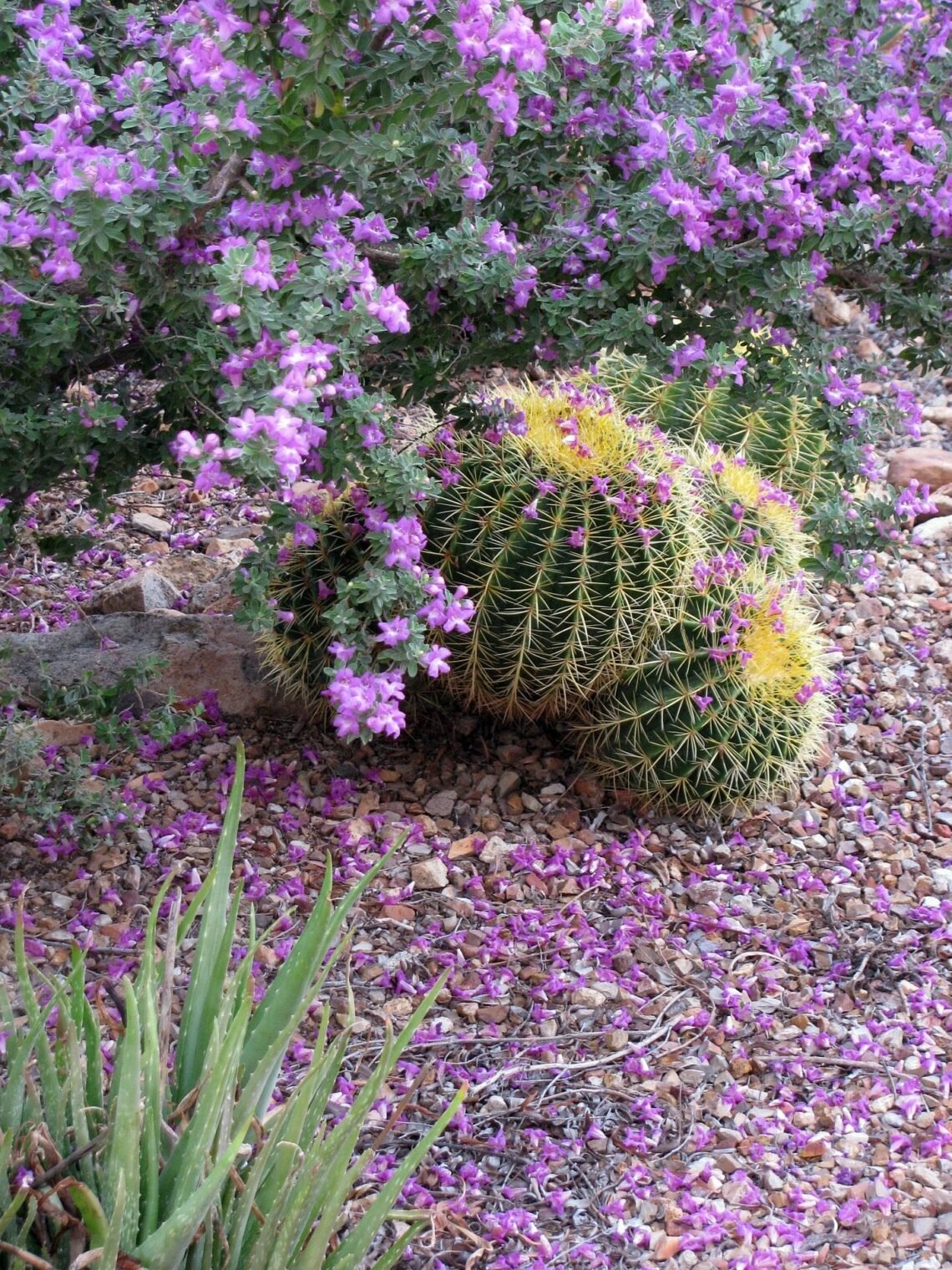
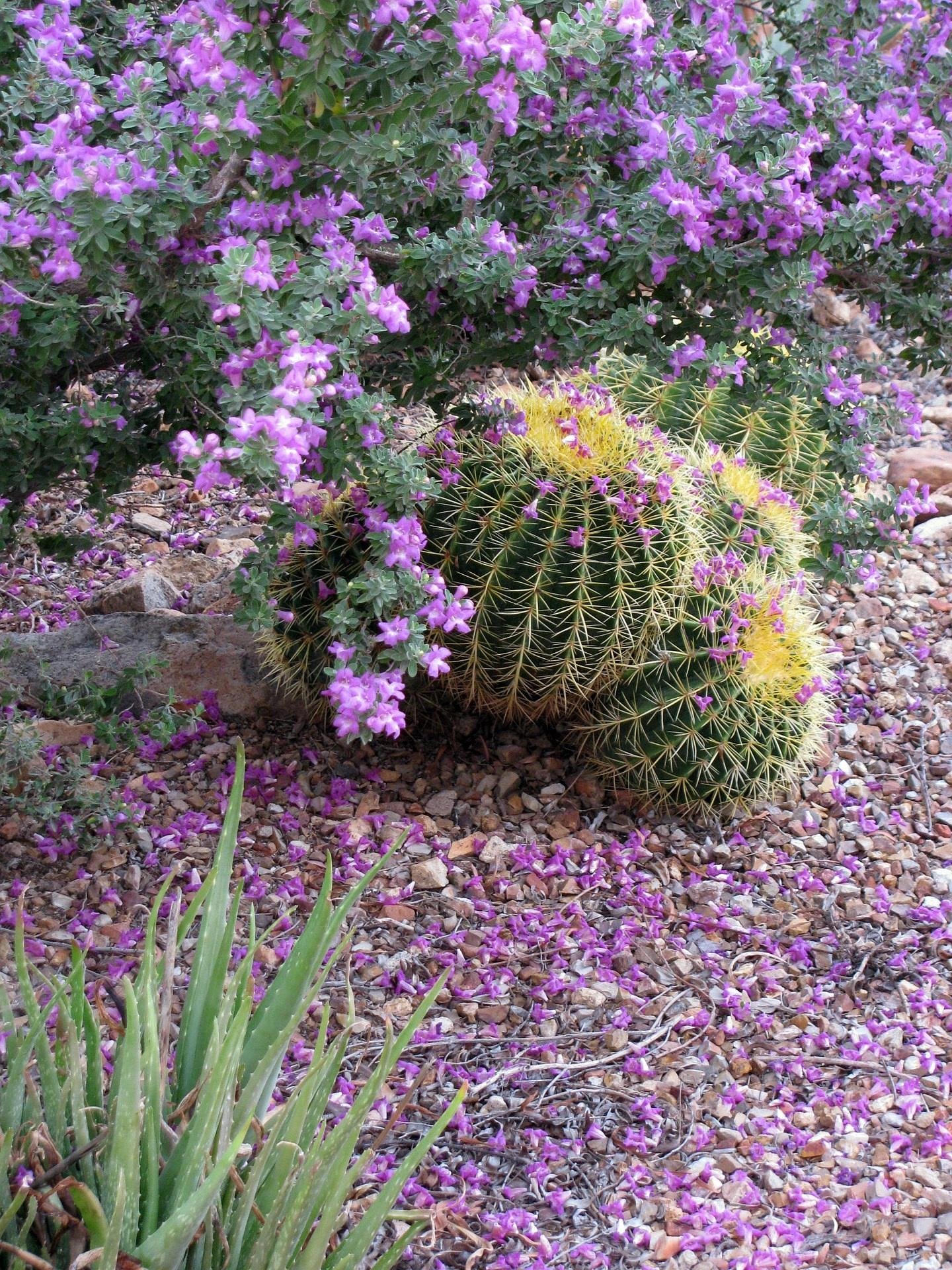
That beautiful purple plant is Texas sage (Leucophyllum frutescens), a Texas native built for hot, dry conditions. Often called the “barometer bush,” it is famous for bursting into bloom around periods of increased humidity and rainfall.
Instead of constantly fighting the climate to keep a poorly suited plant alive, choose plants that already know how to live where you do. Sometimes the easiest way to grow a better garden is to stop asking plants from somewhere else to pretend they live here.
You May Spend Less on Water
Water can become one of the largest recurring costs of maintaining a landscape, particularly in hot or drought-prone areas. Many native plants have adaptations that help them handle the normal rainfall patterns of their home regions.
- Some develop deep root systems.
- Some naturally go dormant during difficult seasons.
- Some have leaves designed to conserve moisture.
- Others thrive in conditions that would leave a thirstier ornamental plant begging for the hose.
New plants still need appropriate watering while they’re becoming established, and “native” certainly doesn’t mean “never needs water.” But an established landscape designed around plants suited to local rainfall can reduce the amount of supplemental irrigation required. Less water can mean a smaller water bill.
It also means less time standing outside holding a hose wondering exactly when gardening became your second job.
You Can Spend Less Replacing Dead Plants
Plant mortality is one of those gardening expenses nobody puts in the original budget. That gorgeous $30 plant becomes a $60 plant when you replace it next spring. Kill it again and congratulations: you’ve now spent $90 attempting to maintain one empty spot beside the porch. Choosing plants naturally suited to your region improves your odds before you ever put a shovel into the ground. You still need to match the individual plant with its preferred sunlight, drainage, moisture and soil conditions.
Native doesn’t mean indestructible. It simply means you’re starting with a plant that already has a relationship with your region rather than asking it to overcome the climate before it can even begin growing.
Native Plants Can Save Time and Labor
Money isn’t the only thing we’re trying to conserve. Your time has value too. A landscape requiring constant watering, fertilizing, spraying, pruning, protecting and replacing becomes another household chore. A thoughtfully designed native garden can become considerably more self-sufficient as it matures.
That may mean fewer inputs.
- Less watering.
- Less babying.
Fewer emergency gardening interventions every time the weather behaves like the weather where you live. You’ll still garden. You’ll still weed, prune, divide, mulch and maintain things when necessary. But there is a tremendous difference between maintaining a garden and continuously performing life support on one.
Native Plants Feed Native Wildlife
Here’s where the benefits extend beyond your wallet. Plants aren’t decorations sitting independently in the landscape. They’re part of an ecosystem.
Native insects evolved alongside native plants. Those insects feed birds, reptiles, amphibians and other wildlife. Flowers provide nectar and pollen. Seeds and berries become food. Stems and leaves provide shelter and nesting material. Some relationships are remarkably specific. Certain insects can use only particular plants or groups of plants as hosts for their young. When native plants disappear from a landscape, the wildlife depending upon them can lose food and habitat along with them. Adding native plants—even to an ordinary suburban yard—can help put some of those resources back.
Pollinators Need More Than Pretty Flowers
Planting flowers for butterflies and bees is wonderful. But supporting pollinators involves more than providing flowers when they’re adults. A butterfly needs nectar, but its caterpillars also need something to eat. That is why host plants matter. The most famous example is the relationship between monarch butterflies and milkweeds. Adult monarchs can drink nectar from many flowers, but monarch caterpillars depend upon milkweed. Other butterflies and moths have their own host relationships. A garden containing native host plants as well as nectar plants can support more of an insect’s life cycle rather than functioning only as a seasonal snack bar.
Native Doesn’t Mean Wild and Messy
There is a persistent idea that planting native means surrendering your yard to a six-foot wall of unidentified vegetation and putting up a sign explaining that the weeds are intentional. It doesn’t.
- Native gardens can be cottage gardens.
- Formal gardens.
- Foundation plantings.
- Shade gardens.
- Prairie-inspired landscapes.
- Container gardens.
- Groundcovers.
- Hedges.
- Flower beds.
You can design with native plants exactly as you would design with other landscape plants. Choose heights intentionally. Repeat colors and shapes. Use borders. Create pathways. Group plants. Maintain edges. A garden can support wildlife and still look like somebody meant to put it there.
Native Plants Aren’t Automatically Maintenance-Free
We should also dispose of another gardening myth before it gets comfortable. Native does not mean maintenance-free.
- Some native plants spread enthusiastically.
- Some reseed.
- Some grow quite large.
- Some need pruning.
- Some require specific soil or drainage.
- Some are wonderfully behaved in one situation and absolute botanical hooligans in another.
Research the plant before buying it. Find out its mature size. Know whether it spreads by seed, underground roots or both. Check its moisture and sunlight requirements.
And make sure it is actually native to your region rather than merely being marketed with words such as “wildflower,” “natural,” or “pollinator friendly.”
Ask for the Botanical Name
Common plant names can be confusing. Different plants can share the same common name, and the same plant may have several names depending on where you live. When you’re shopping, look for the botanical name. That gives you something specific to research. You can then determine whether that exact species is native to your area, how large it becomes, what conditions it prefers and what wildlife it may support. A little research before purchasing can save years of arguing with the wrong plant.
You Don’t Have to Replace Your Entire Garden
Please don’t read this article, look out the window and decide you must rip every non-native plant out of your yard tomorrow morning. That would be expensive, wasteful and exhausting.
Start small. When a plant dies, consider replacing it with an appropriate native. Add a native flowering plant to an existing bed. Replace an unused patch of lawn with a small garden. Add a native host plant for a butterfly you enjoy seeing. Choose a native shrub the next time you need one.
Over time, the balance of your landscape can change without requiring you to bulldoze everything you’ve already built.
Start With Plants That Want to Live Where You Live
This is really the entire philosophy.
Gardening becomes much easier when you stop treating your climate as an obstacle that every plant must somehow overcome.
- Look at your rainfall.
- Your soil.
- Your winters.
- Your summers.
- Your sunlight.
- Your available space.
Then find plants that look at those exact same conditions and say, “Yes. This will do nicely.” You’ll still lose plants occasionally because gardening enjoys keeping us humble. But starting with plants adapted to your region can reduce expenses, conserve water, support wildlife and give you back some of the time you would otherwise spend keeping unsuitable plants alive. And beginning next Sunday, we’re going to start meeting them.
First stop: Texas. 🌿